Our Techniques
Torque Release Technique
Torque Release Technique (TRT) - One of the most specific, neurologically-based chiropractic techniques in the world
At Trail Chiropractic, Dr. Landon Blake utilizes Torque Release Technique (TRT) is a research-backed, neurologically focused chiropractic method known for its unmatched precision and consistency. Dr. Blake is Advanced Proficiency Certified in TRT, placing this practice among a small group trained to deliver this level of specific, scientific care.
Torque Release Technique is designed to be gentle, reproducible, and effective for all ages, from newborns to highly active adults. Rather than using force or twisting, TRT relies on precision to create powerful neurological change. This allows us to focus on the root cause of dysfunction instead of simply managing symptoms—leading to meaningful, long-term results we see every day in practice.
How Torque Release Technique Works
Torque Release Technique is a specialized neurological analysis that allows Dr. Blake to identify areas of nerve interference within the spine that often associated with spinal subluxation. These interferences disrupt communication between the brain and the body, affecting how the nervous system regulates movement, healing, and overall function.
Once identified, a specific and scientific adjustment is delivered using a gentle instrument. This adjustment helps release tension and pressure from the nervous system, restoring clearer communication from the brain, down the spinal cord, and throughout the entire body.
In simple terms, TRT supports the body’s ability to heal, adapt, and correct itself over time, leading to improved function, resilience, and overall health.

Pediatric Experience (PX)
The Pediatric Experience (PX) at Trail Chiropractic is a guided, child-centered approach to care that focuses on how a child’s nervous system develops, adapts, and responds to stress over time.
Rather than focusing only on symptoms, PX helps parents better understand their child’s development, recognize signs of nervous system stress, and follow a clear, individualized plan designed to support healthy function as their child grows. This is not rushed, reactive care — it is intentional, structured, and built around long-term neurological support.
Why the Nervous System Matters in Children
The nervous system coordinates movement, digestion, sleep patterns, immune responses, emotional regulation, and developmental milestones. When spinal tension and neurological stress are present — whether from birth, early falls, illness, growth spurts, or daily activity — a child’s ability to regulate and adapt efficiently may be challenged.
Through detailed consultation and age-appropriate evaluation, we assess how spinal motion and nervous system balance may be contributing to your child’s health challenges.
Care is:
Gentle
Age-appropriate
Specific to the child
Focused on long-term function and adaptability
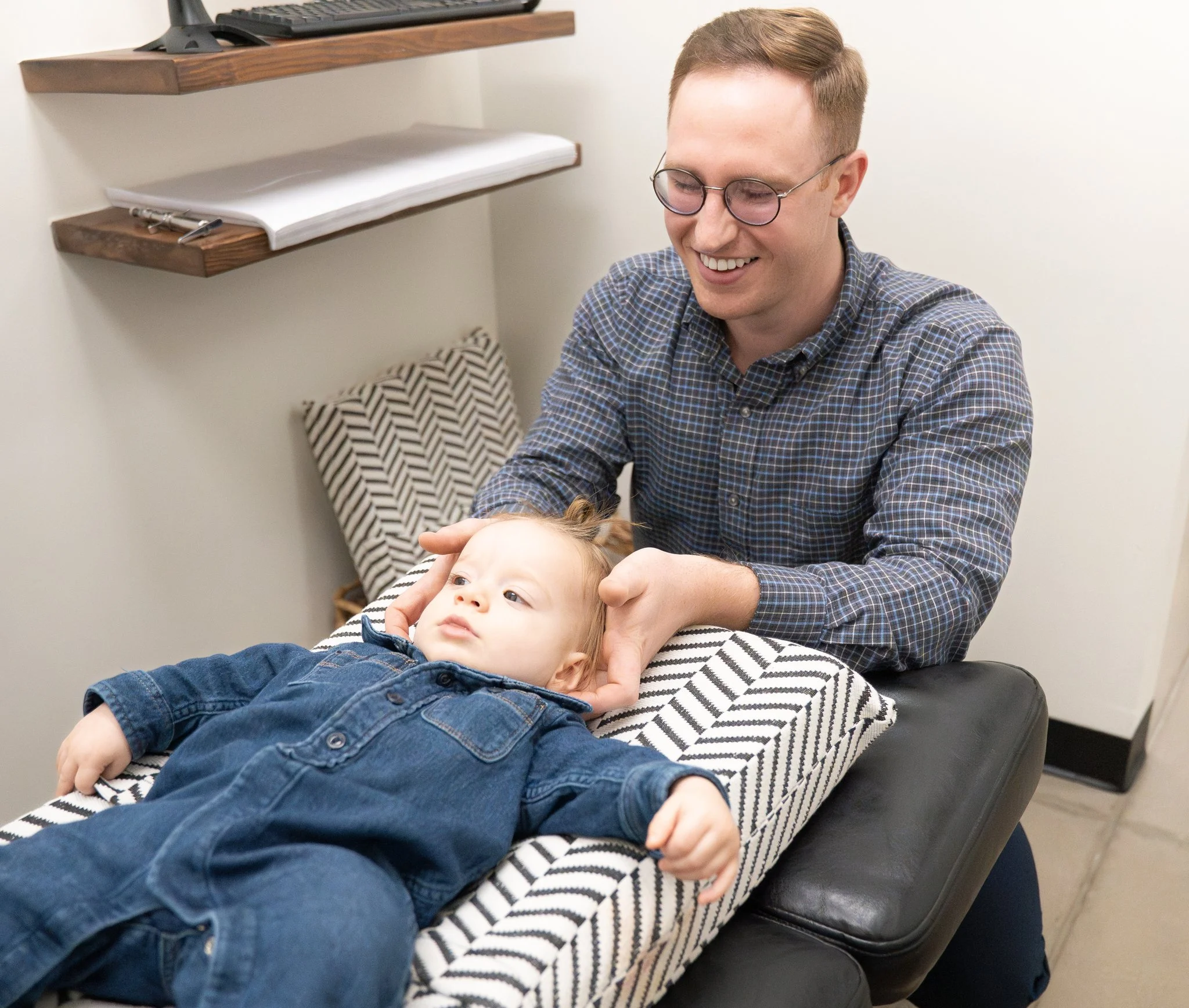
When Parents Seek PX Chiropractic Care
Families commonly seek a pediatric chiropractic evaluation when their child is experiencing:
Recurrent ear discomfort
Digestive challenges (reflux, constipation, colic)
Sleep disturbances
Sensory processing difficulties
Focus or behavioral concerns
Developmental coordination delays
Muscle tone concerns
Chiropractic care does not treat or cure medical diseases. Our goal is to evaluate spinal and nervous system stress and support improved function so a child’s body can regulate and adapt more effectively.
Chiropractic Care for Children
Chiropractic care is not just for adults. Children experience physical stress from:
The birthing process
Learning to crawl and walk
Falls and tumbles
Rapid growth phases
These stresses can influence spinal motion and nervous system balance during critical developmental stages.
Pediatric chiropractic adjustments are extremely gentle and tailored to a child’s developing body, using pressure similar to checking the ripeness of a tomato for infants.
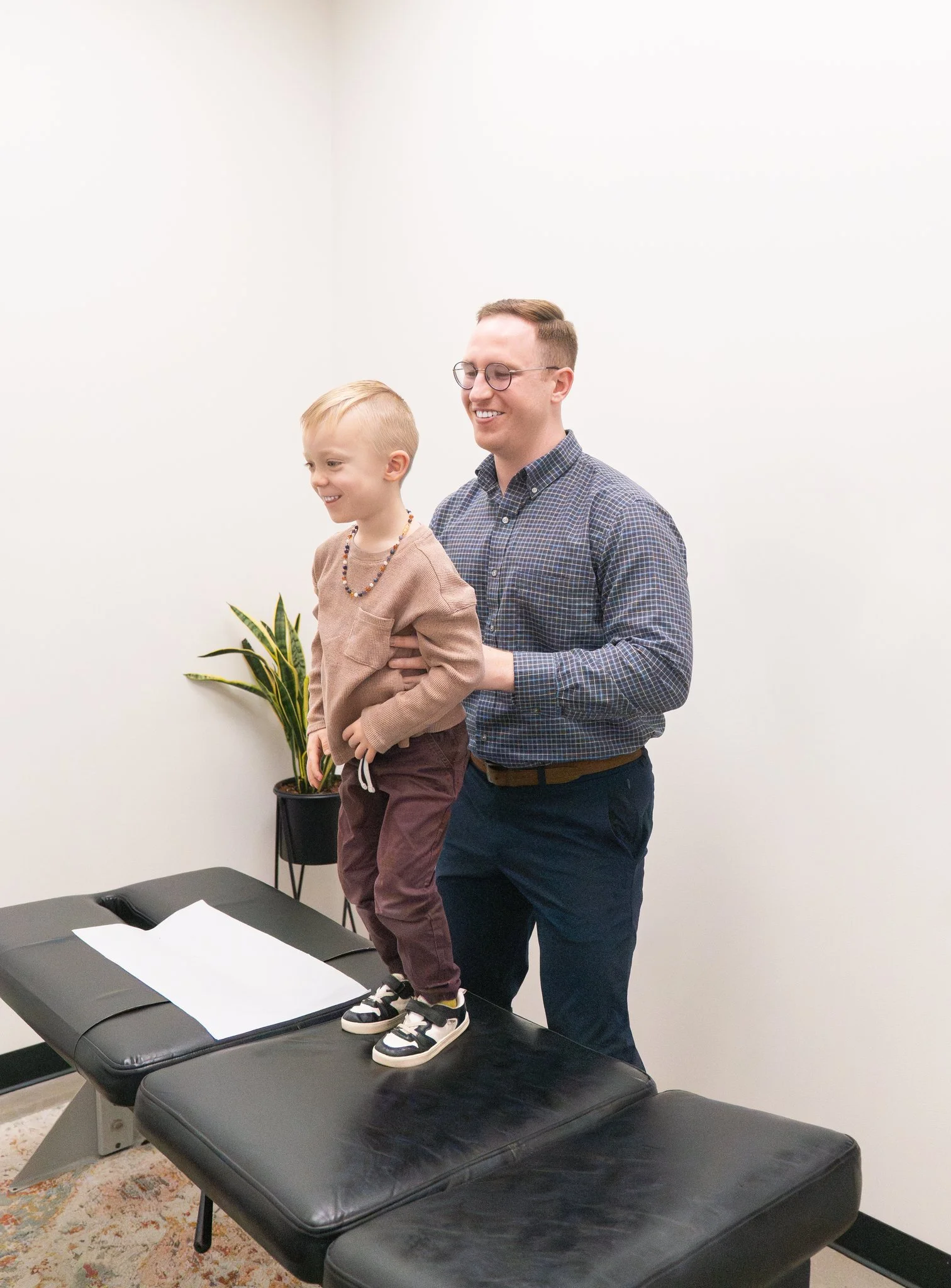
Signs Your Child May Benefit from an Evaluation
Parents often schedule a pediatric evaluation when they notice frequent tension or discomfort, ongoing digestive upset, persistent sleep struggles, difficulty with latching or nursing, recurrent minor injuries, or challenges adapting to stress.
At Trail Chiropractic, each visit begins with a detailed consultation and age-appropriate examination, followed by a clear explanation of findings and individualized care recommendations. We provide ongoing reassessment to monitor progress and focus on supporting proper spinal motion and healthy nervous system function so children can grow, adapt, and thrive with a strong neurological foundation.
Pregnancy & Webster Technique
The Webster Technique
The Webster Technique is a gentle, specific chiropractic approach focused on improving balance and function within the pelvis and sacrum. At Trail Chiropractic, this technique is used to address tension, restriction, and improper motion in the sacroiliac (SI) joints and surrounding structures. These areas play a significant role in posture, movement, and nervous system communication.
When the pelvis is restricted or under stress, the body may compensate, leading to discomfort and increased mechanical strain. The Webster Technique focuses on restoring proper pelvic motion and reducing sacral tension so the body can adapt more efficiently.
Adjustments are precise, controlled, and gentle — emphasizing neuro-biomechanical function rather than forceful manipulation.
Prenatal Chiropractic Care
Pregnancy creates significant physical and neurological demands on a woman’s body. As posture shifts and the center of gravity changes, stress on the pelvis, lower back, and surrounding soft tissues often increases.
Prenatal chiropractic care at Trail Chiropractic is designed to support:
Pelvic balance and alignment
Reduced mechanical stress in the lower back and SI joints
Improved comfort during pregnancy
Healthy nervous system function
Care is tailored to each stage of pregnancy and modified appropriately for safety and comfort.
When to Consider Prenatal Care
Expectant mothers often seek care when experiencing:
Lower back discomfort or sciatica
Pelvic or sacroiliac tension
Round ligament discomfort
Postural strain
Increased pressure or imbalance as pregnancy progresses
Chiropractic care does not provide obstetric services and does not replace prenatal medical care. Our role is to support proper spinal motion and pelvic balance so the body can function and adapt as pregnancy progresses.
Why Pelvic Balance Matters
Balanced pelvic motion supports efficient movement patterns and reduces compensatory stress within the spine and surrounding tissues. The Webster Technique emphasizes:
Specific analysis of pelvic alignment
Gentle sacral adjustment
Proper sacroiliac joint mobility
Complementary soft tissue support
The goal is improved mechanical function and reduced tension. This allows the body to move and adapt more naturally during pregnancy.
Our Approach at Trail Chiropractic
Prenatal visits at Trail Chiropractic are intentional, thorough, and tailored to the unique needs of each expecting mother. Every visit begins with a detailed consultation and a pregnancy-appropriate examination designed to assess pelvic balance, spinal function, and nervous system health. We take the time to clearly explain our findings so you understand exactly what is happening and why it matters. From there, we provide individualized care recommendations based on your specific needs and goals, with ongoing reassessments to ensure progress and adaptation as your body changes throughout pregnancy. Our focus is to deliver safe, precise, neurologically focused chiropractic care that supports optimal comfort, mobility, and function during every stage of pregnancy.
Manual Adjustments
Manual chiropractic adjustments are specific, hands-on corrections delivered to the spine or extremities with intent and precision. Using a controlled, quick thrust, the chiropractor restores proper motion to a vertebral segment or joint that has lost its normal alignment and function. The objective is not merely to “move a bone,” but to reduce interference within the nervous system so the body may better coordinate, adapt, and express health.
Where movement is restricted, nerve communication is often altered. By restoring motion and structural balance, manual adjustments support improved biomechanics, decreased mechanical stress, and more efficient neurological function. This is conservative, non-surgical, and drug-free care rooted in the principle that the body is self-regulating and self-healing when free from interference.
Unlike instrument-assisted methods, manual adjustments provide direct tactile feedback. The chiropractor assesses tissue tone, joint resistance, and segmental motion through the hands — allowing for precise correction based on what is palpated and observed. Specificity is paramount. Force is controlled. Intention is exact.
At times, an audible release — commonly referred to as a “pop” — may be heard. This sound is known as joint cavitation, created by the release of gas within the joint space as normal motion is restored. It is not the sound of bones “cracking,” nor is it inherently painful. However, if you prefer a different approach, alternative techniques are available and can be utilized to ensure your comfort.
The adjustment is delivered for one purpose: to restore proper function so the body can do what it was designed to do — heal, adapt, and thrive. By improving nervous system communication, we help the body respond more efficiently to stress and perform at a higher level.